

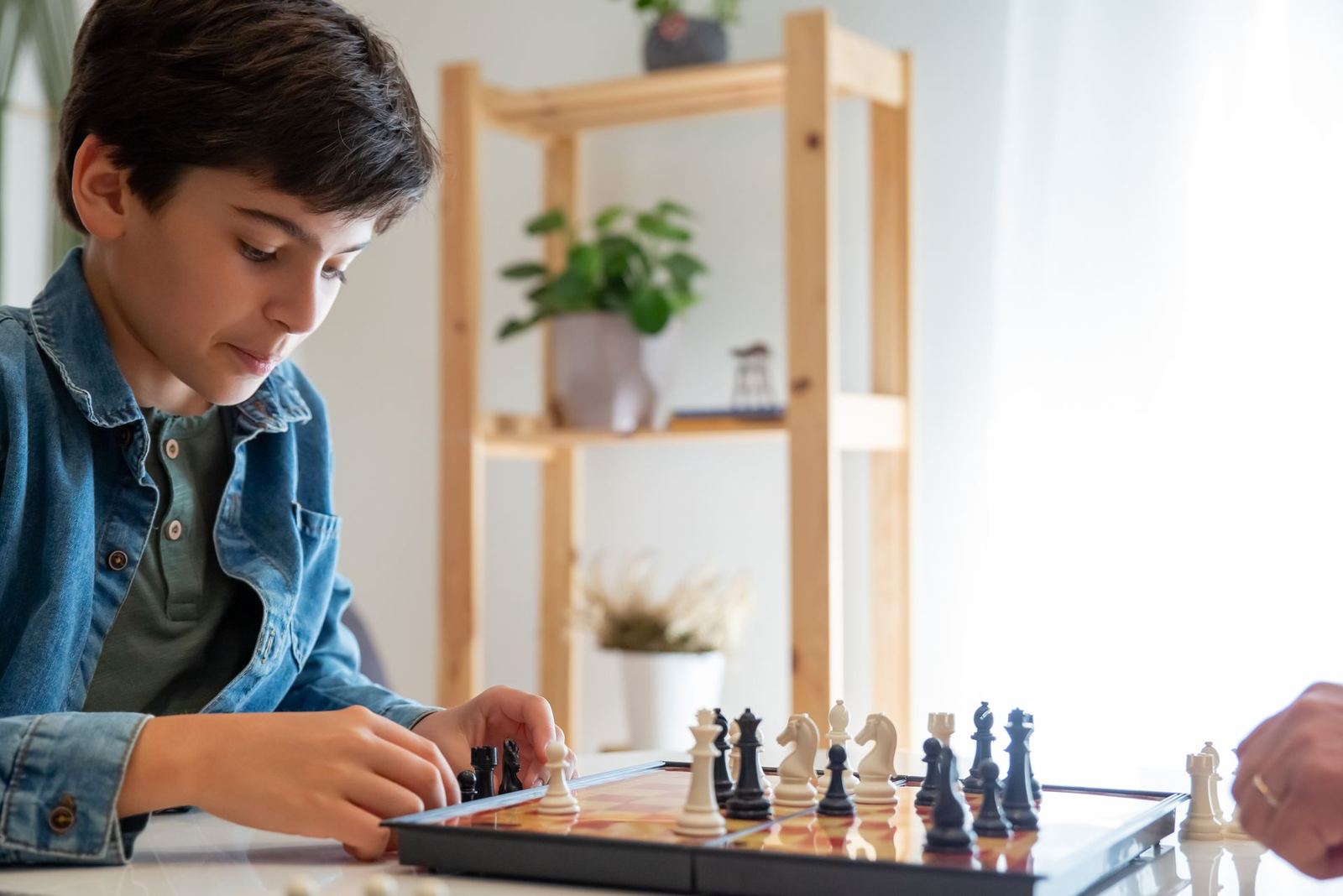
Puzzles, endgames, games and analysis: a simple, practical daily plan for productive chess study at home between club sessions.
Two club sessions a week provide a solid basis for progress, but the real difference comes from short, regular study on the days in between. Many students think studying at home means “playing lots of fast games online”. Fast games are fun, but they are not enough for improvement on their own. Here is the 30-minute daily plan we recommend to our students.
1. Warm-up: 10 minutes of puzzles
Solve 8-10 tactical puzzles at the same level every day. Accuracy matters more than quantity: complete the whole variation in your head before playing the move. Noting puzzles you got wrong in a notebook and solving them again at the weekend helps the motifs stick.
2. Technique: 10 minutes of endgames
Endgames are the area most students neglect, yet ignorance of endgames is the most common reason won games are lost. Choose one topic for each day of the week: opposition in pawn endings, the Lucena and Philidor positions in rook endings, mating with queen and rook. Repeat the position by playing it against a family member or on your own board.
3. Practice: 10 minutes of play or analysis
Every other day play one long game (at least 15 minutes plus increment); on the other days analyse your latest game. In analysis, write down your own thoughts first, then talk to your coach, and use an engine last. Memorising the move an engine suggests without understanding why it should be played gains you nothing.
A sample week
- Monday: puzzles + pawn ending + a game
- Tuesday: club session
- Wednesday: puzzles + rook ending + analysis of the last game
- Thursday: puzzles + mating patterns + a game
- Friday: club session
- Weekend: an in-club tournament or studying a classic game
A note for parents
This plan suits the 10-14 age group; for younger children cut it to 15-20 minutes and combine puzzles with play. To keep screen time under control, solving puzzles from printed books or the club’s weekly homework book is also a good option.
Keeping motivation up
Boredom is the biggest enemy of regular study. So it is important to set up the plan not as a strict list of rules but as a game in which the child can see their progress. Ticking off solved puzzles on a chart, reviewing accuracy with the coach at the end of the month and celebrating small goals keep motivation alive. Skipping a session on days when your child is ill or tired is also part of the plan; what matters is keeping the weekly routine going. If you miss a whole week, simply pick up where you left off rather than doubling the time the following week.
Related Posts
Getting Ready for a First Tournament: Clock, Notation and Tournament Psychology
Licence, registration, the chess clock, notation and the round after a loss: a checklist for children and parents…
Read more